





Why Ultra Isolation Transformers Are Critical for CNCs & Sensitive Diagnostics (Noise Attenuation & Harmonics)
Learn how Ultra Isolation Transformers eliminate electrical common-mode noise, eliminate ground loops, and mitigate harmonic heating in CNC tooling and medical diagnostics.

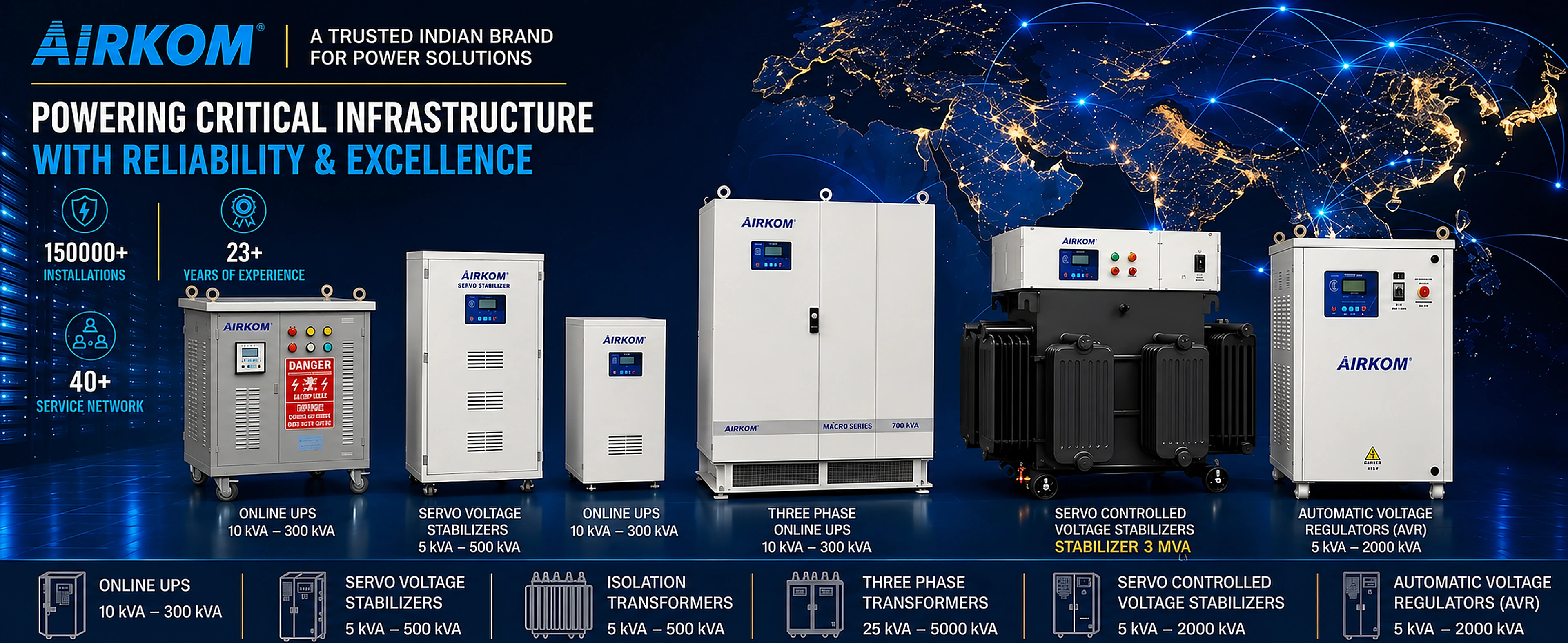
Modern precision engineering facilities frequently encounter baffling electronic anomalies: CNC machining centers resetting intermittently without blown fuses, coordinate measuring machines (CMM) reporting measurement drift, programmable logic controllers (PLCs) suffering memory corruptions, or medical CT scanners exhibiting image artifacts.
In a majority of these cases, the facility already has a functional servo voltage stabilizer or utility grid transformer. However, while stabilizers regulate voltage amplitude, they do almost nothing to block high-frequency electrical noise, transient spikes, or ground loops.
The permanent engineering solution is an Ultra Isolation Transformer (UIT) equipped with double electrostatic shielding and galvanic decoupling.
1. What Is an Ultra Isolation Transformer?
A standard transformer transfers electrical energy between primary and secondary windings through mutual magnetic induction. However, because primary and secondary coils sit physically adjacent on a laminated steel core, there exists an inherent inter-winding capacitance (Cs).
This inter-winding capacitance acts as a low-impedance highway for high-frequency common-mode noise, lightning surges, and SCR switching spikes, letting them pass straight from the noisy factory floor grid into sensitive control electronics.
An Ultra Isolation Transformer breaks this conductive and capacitive path by inserting:
- Galvanic Isolation: Primary and secondary windings have zero physical or electrical connection.
- Double Electrostatic Shielding: Grounded copper foil shields inserted between primary and secondary windings divert stray capacitive noise currents directly to earth ground before they can couple into the secondary winding.
- Dedicated Clean Neutral: The secondary neutral is locally grounded at the machine incomer, creating a clean, noise-free local reference.
2. Common-Mode Noise vs. Transverse-Mode Noise
Understanding industrial electrical interference requires distinguishing between two types of electrical noise:
Transverse (Normal) Mode Noise
Noise that appears between the phase conductors (Line-to-Line or Line-to-Neutral). This noise is largely attenuated by standard LC filters, surge suppressors (MOVs), and transformer leakage inductance.
Common-Mode Noise (The Primary Equipment Killer)
Noise that appears identically on all phase conductors simultaneously with respect to earth ground. Common-mode noise is generated by:
- High-frequency switching of Variable Frequency Drives (VFDs) and PWM inverters.
- Arc welders, plasma cutters, and EDM discharge machines sharing the same ground grid.
- Lightning strikes and utility grid capacitor bank switching.
Standard transformers provide only 10 dB to 20 dB of common-mode attenuation. An Airkom Ultra Isolation Transformer delivers 100 dB to 120 dB of common-mode noise rejection—reducing a destructive 1,000-volt high-frequency spike down to less than 0.01 volts at the load!
3. Key Industrial Benefits of Ultra Isolation Transformers
| Industrial Challenge | Without Ultra Isolation Transformer | With Airkom Ultra Isolation Transformer |
|---|---|---|
| Ground Loop Currents | Different earth potentials across plant floor circulate currents through communication cables, burning RS-485/EtherCAT ports. | Completely broken. Secondary winding establishes a fresh, isolated local ground with zero circulating loops. |
| High Neutral-to-Earth Voltage | Floating or distant substation neutral causes 15V–40V neutral-earth potential, damaging electronic power supplies. | Secondary neutral bonded locally to earth; neutral-to-earth voltage kept below 1.0V. |
| VFD Harmonic Feedback | Non-linear load harmonics reflect back into upstream distribution transformers, causing overheating and breaker tripping. | Traps triplen harmonics (3rd, 9th, 15th) within delta secondary windings, protecting the main factory grid. |
| Dielectric Breakdown | Voltage transients degrade machine motor winding enamel over time. | Absorbs and dissipates high-voltage transients via grounded electrostatic shields. |
👉 Explore Airkom's Industrial Power & Isolation Transformer Range.
4. Understanding K-Factor for Non-Linear Harmonic Loads
Standard distribution transformers are rated for linear sinusoidal 50Hz loads. When powering non-linear loads (such as DC drives, robotics, laser cutters, and switching power supplies), harmonic currents cause massive eddy current heating in transformer windings.
When specifying an isolation transformer for modern CNC machinery, ensure it is K-Factor Rated:
- K-1: Standard linear resistive and inductive loads (motors, resistive heating).
- K-4: Welders, induction heaters, and minor VFD drives.
- K-13: Modern automated production cells, CNC tooling centers, telecommunications hubs, and multi-drive VFD arrays.
- K-20: Data centers, hospital radiology departments, and large SCR-controlled rectifiers.
Airkom manufactures K-4, K-13, and K-20 rated isolation transformers featuring double-sized neutral conductors, transposed windings to minimize skin effect, and prime low-loss CRGO silicon steel cores.
5. Typical Installation Architecture
For maximum equipment protection in heavy manufacturing, the recommended power conditioning architecture is:
Raw Grid Mains ──> Servo Voltage Stabilizer ──> Ultra Isolation Transformer ──> Critical CNC / Medical Load- The Servo Voltage Stabilizer corrects large macro-voltage fluctuations (±25% incoming voltage sags and surges).
- The Ultra Isolation Transformer filters micro-disturbances (harmonics, spikes, common-mode noise, and ground loops), ensuring the equipment receives laboratory-grade clean power.
Conclusion & Custom Specifications
Whether you need a compact 5 kVA air-cooled isolation transformer for an imported Japanese SMT placement machine or a 500 kVA oil-cooled K-rated unit for a complete CNC machine shop, Airkom Electronics custom-engineers transformers to your exact voltage, tap, and enclosure requirements.
Request an engineering quotation for custom transformers or speak with an Airkom design engineer today.
Require Custom Sizing or Technical Specifications?
Airkom engineers provide complimentary load audits, harmonic calculations, and customized power protection proposals for manufacturing facilities.
Manufacturing precision servo stabilizers, online UPS systems, and power transformers since inception. Certified ISO 9001, ISO 14001, CE marked, and approved by NABL, STQC, and GeM. Plant located at Mahape, Navi Mumbai.